
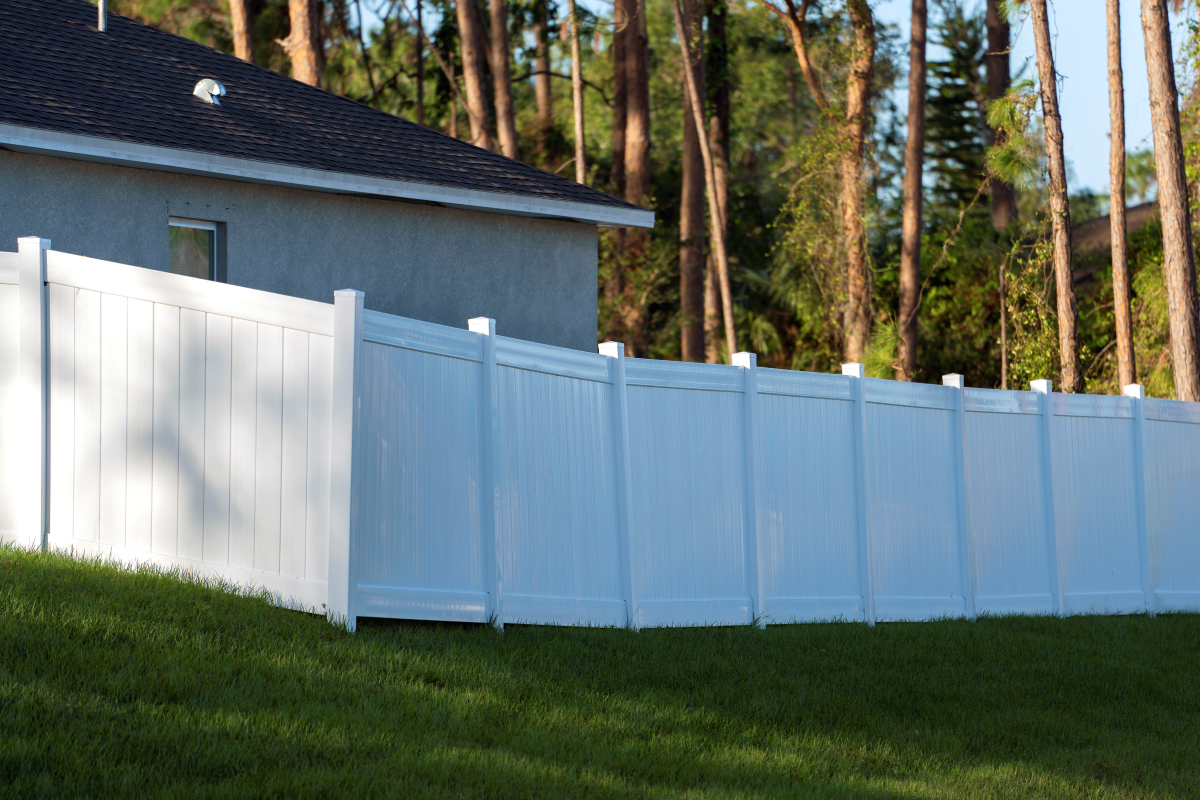
Florida's weather is never gentle on outdoor enclosures or buildings. Homeowners across Hillsborough County find their fences tested every month, and the wind, humidity, and rain will always expose weak points. Whether you've got a metal, wood, or a hurricane-resistant vinyl fence, you're going to see certain fairly predictable results from constant exposure to our weather.
How Hillsborough County Weather Affects Your Fence
Central Florida is in a humid, subtropical climate, which means heat, sunlight, and humidity. We also get nearly 50 inches of water a year, and nearly half of it between June and September. That means your fence spends the warm season wet at the base and periodically loaded by wind.Wood
Wood boards absorb water when the air is heavy and release it as things dry out, and this process repeats until you start to see checks open along the grain. Then the rot starts. Rot fungi need moisture and warmth: a Florida summer supplies both in spades. Pressure-treated pine resists insects better than untreated wood and other types, but it still softens at the end grain once the stain wears away. Ultraviolet radiation compounds the problems that the moisture caused. The same wavelengths that can burn your skin in under half an hour also break down the lignin in the wood, which is the process that turns unfinished boards gray, chalks paint, and makes any unstabilized polymers get brittle at the corners.Once wind speeds climb in a storm, a solid wood privacy panel starts to behave like a sail and transfers that load into the posts and rails. An open picket or mesh face sheds the pressure better because air passes through instead of stacking against a wall. A solid fence is going to start to fail earlier when it gets hit by enough wind enough times.